
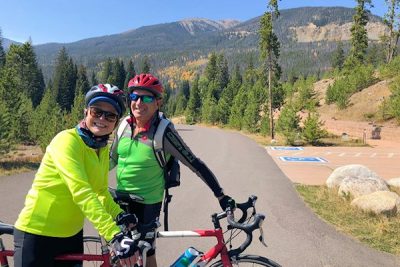
 Colorado’s breathtaking trails, bustling bike lanes, and outdoor-first culture make cycling a part of everyday life here. Yet bikers—whether mountain or urban—share the roads with fast-moving traffic, and the law has had to evolve. Since this piece was originally published in December 2018, Colorado has seen important legal changes that enhance safety and clarity for both cyclists and drivers.
At that time, Colorado didn’t require bike helmets by law—though they were strongly recommended—and talking on the phone while riding wasn’t prohibited. The core of safe cycling advice revolved around visibility, gear, and being alert.
The Safety Stop Law
Perhaps the most rider-friendly reform was the Colorado Safety Stop (also known as the Idaho Stop) law, which was enacted statewide in 2022. It allows cyclists (and other low-speed conveyances) aged 15 and older—or children accompanied by an adult—to treat a stop sign as a yield and a red light as a stop, so long as they proceed no faster than 10 mph and yield appropriately. This law is meant to reduce crashes at controlled intersections.
Before 2022, several localities, like Dillon, Breckenridge, Summit County, and Aspen, had already adopted their own “Idaho Stop” ordinances. In 2018, the state standardized its language, allowing municipalities to opt in, while preventing its application on state highway system roads.
Bicycle Safety Rules & Best Practices
Colorado’s official guidance remains grounded in the idea that cyclists are vehicles with full rights on roads. The state law includes:
- Riding with traffic: Cyclists must obey traffic signals, yield to pedestrians, and signal turns 100 feet in advance.
- Riding at dusk or in low visibility: White front light, red rear reflector, and side reflectors required.
- Riding side-by-side: Where allowed and when not obstructing traffic, cyclists can use the entire lane when needed, but are usually advised to ride in the right third for safety and smoother traffic flow.
- Riding on sidewalks: Where allowed, cyclists must yield to pedestrians and proceed with caution.
These guidelines remain essential today—after all, most accidents involving cyclists stem from drivers who didn’t see them. Bright clothing, good lighting, and defensive riding are still your best advantages.
“Most of us switch roles every day — we drive to a trailhead or park, then hop on a bike or take a walk. We are all drivers, bicyclists, or pedestrians at some point.” —Darrell Lingk, Director, Office of Transportation Safety, CDOT (July 2025)
eBike Laws & Developments
Colorado’s classification of eBikes aligns with federal standards: Class 1, 2, and 3, with power capped at 750 W and speed at 20 mph. Riders aren’t required to register, insure, or license these bikes because they’re not motor vehicles. However, motors can’t be used on bike or pedestrian paths unless a local ordinance allows it—Boulder has restricted motors over 400 W in bike lanes.
Legislation in 2025, like HB25-1197, aims to promote the safe adoption of eBikes across Colorado alongside broader bicycle infrastructure initiatives.
Infrastructure Funding & Legislative Measures
Colorado’s investments in bicycling infrastructure continue to face financial constraints, given a state budget deficit projected at $1.2 billion for FY 2025–26. Despite cuts—including $71 million clawed back in transportation grants—advocates are pushing for new funding solutions.
One such measure, HB25-1303, would impose a $3.50 annual fee on auto insurance policies starting January 1, 2026, with 70% of revenue funneled into bicyclist/pedestrian infrastructure and 30% to reduce wildlife–vehicle crashes.
Automated Enforcement & Driver Education
The SB23-200 bill (2023) enhances Colorado’s ability to deploy speed enforcement cameras more widely—covering high-speed roads where most casualties occur. These cameras significantly reduce crash-related injuries.
Updates to Safe Cycling in Colorado

What This Means for You — Whether You Ride or Drive
- Cyclists: You can now take advantage of the Safety Stop—just ride defensively and responsibly. eBikes bring freedom, but be aware of where they’re allowed. Support local advocacy for better funding and infrastructure.
- Drivers: Watch for cyclists using Idaho Stops, give them room and time, and expect more cycling education to be included in driver training in the future. Automated cameras are becoming more common.
- Communities & Advocates: Rising costs challenge bicycle infrastructure. Bills like HB25-1303 could help, but public support is critical for making change.
Document Your Accident
It can feel overwhelming to document the scene of an accident—that’s why we created this free resource with tips on how to record the scene and injuries with your phone. Learn what to capture with photos and videos to help build your successful legal case. Includes a printable checklist you can keep in your glove box or bike saddle bag.

If You’re Injured, You Don’t Have to Ride Alone
Cycling is one of the best ways to enjoy everything Colorado has to offer—but it also comes with risks. Even when you do everything right—wearing bright gear, using proper lights, following the Safety Stop law, and riding defensively—accidents still happen because of careless or distracted drivers.
When they do, the consequences can be overwhelming. Medical bills, lost income, and the stress of recovery can weigh heavily on you and your family. That’s why having an experienced legal team on your side matters. At Shafner Injury Law, we know Colorado’s cycling laws inside and out, and we’ve helped injured cyclists stand up to insurance companies and get the compensation they deserve.
We believe that every rider’s rights are worth protecting. If you or someone you love has been hurt in a bicycle accident, don’t face it alone. Contact Shafner Law today for a free consultation. We’re here to listen, fight for you, and make sure you have the resources you need to heal and move forward.
At the end of the day, safety is everyone’s responsibility, but when drivers fail to share the road, you deserve justice.