
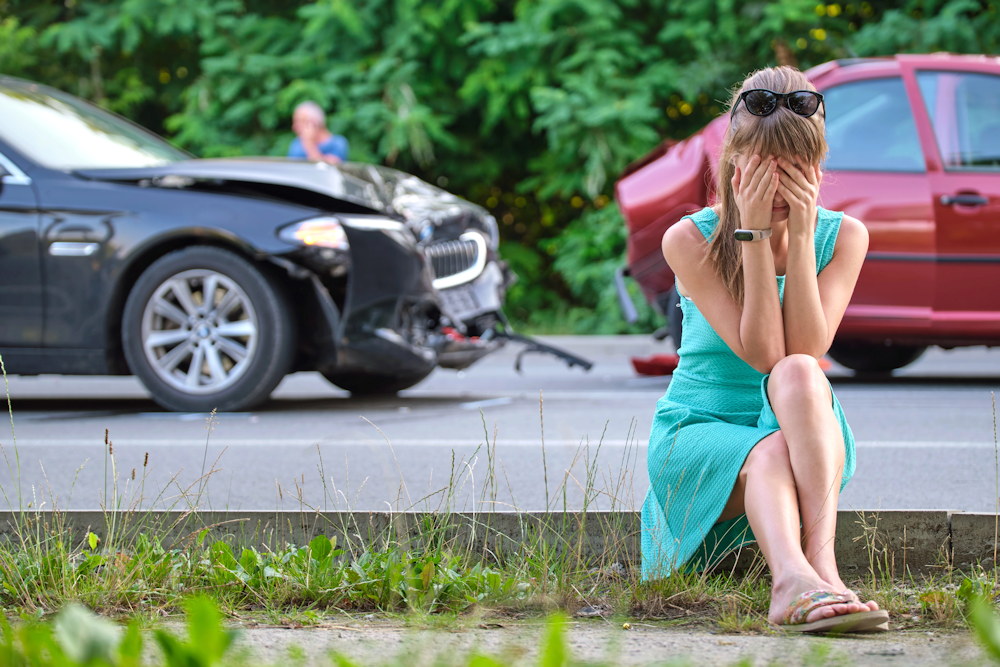
There’s a particular kind of devastation that comes with being hurt by a drunk driver. Not just the physical injuries, although those are often severe, but the knowledge that it didn’t have to happen. Someone made a choice. They knew the risks, ignored them, and got behind the wheel anyway, and now you’re the one paying for it.
We’ve represented drunk driving victims for nearly 50 years, and what strikes us every time is how often people don’t know the full scope of their legal rights in this situation. They know they can file an insurance claim, but what many don’t know is that drunk driving cases are fundamentally different from ordinary car accident claims in ways that can significantly affect how much you recover, and from whom.
If you or someone you love were hit by a drunk driver in Colorado, this guide explains exactly what you need to know.
The Drunk Driving Criminal Case and Your Civil Case Are Not the Same
This is probably the most important thing to understand right from the start, and it surprises more people than you’d think.
When a drunk driver is arrested, the State of Colorado handles the criminal case. That process (the DUI charge, the court date, the potential fine or jail time) is entirely separate from your personal injury claim. You don’t control it, you don’t have to wait for it to conclude, and its outcome doesn’t determine whether you can recover compensation.
The two cases run on parallel tracks with different rules.
- A criminal conviction requires proof beyond a reasonable doubt (the highest legal standard to meet).
- A civil personal injury case requires only a preponderance of the evidence, meaning it’s more likely than not that the driver caused your injuries. That’s a meaningfully lower bar to prove.
What this means practically: even if a drunk driver is never criminally convicted, even if charges are reduced or dropped, you can still win a civil case against them. If the driver pleads guilty or is convicted of DUI, that conviction can be used as powerful evidence of negligence in your civil case. A guilty plea to DUI in Colorado effectively establishes what’s called negligence per se —a legal standard meaning that the driver violated the law and is therefore responsible for the resulting harm.
What You Can Recover, and Why Drunk Driving Cases Go Further Than Most
In a standard car accident claim, you can recover economic damages (medical bills, lost wages, property damage, and future care costs) and non-economic damages (pain and suffering, emotional distress, and loss of enjoyment of life).
Drunk driving cases can go a step further. Colorado law allows for punitive damages, also called exemplary damages, when a defendant’s conduct is found to be willful and wanton. Choosing to drive drunk, with full knowledge of the danger it poses to others, is one of the clearest examples of willful and wanton conduct recognized by Colorado courts.
Under Colorado law, punitive damages are designed to punish at-fault parties for outrageous or egregious conduct to deter others from engaging in the same behavior. Punitive damages are awarded on top of your compensatory damages (the bills and losses you’ve already documented to be compensated for) and typically are limited to not exceed the injured party’s damage award. However, in certain circumstances, the court may increase that cap up to three times the actual damages.
There’s an important nuance here worth knowing. In Colorado, insurance companies are generally not obligated to pay punitive damages, meaning if a jury awards them at trial, the drunk driver is personally responsible for that amount out of their own pocket. If the driver has significant assets, that can mean significant additional recovery for you. If they don’t, collecting on a punitive award can be difficult in practice.
But the threat still has real strategic value. Insurers know that a jury hearing a drunk driving case may be angry enough to hit their policyholder with a substantial personal judgment — one that the insurer won’t cover. Rather than risk leaving their client financially exposed on top of the compensatory damages they do have to pay, insurers often prefer to settle reasonably before it gets that far. An experienced attorney knows how to use that dynamic at the negotiating table.
Could the Bar or Restaurant That Served a Drunk Driver Be Liable Too?
In some drunk driving cases, the answer is yes, and this can be critical when the driver has limited insurance or personal assets to pursue.
Colorado has what’s called a dram shop law, which allows someone injured by a drunk driver to hold a bar, restaurant, or social host that served alcohol to the driver liable for the harm the driver caused, provided the driver was underage or visibly drunk at the time.
To succeed under Colorado’s dram shop law, you have to prove the vendor willfully and knowingly served or sold alcohol to someone who was either under age 21 or visibly intoxicated. That’s a meaningful legal standard to meet. It’s not enough that the bartender should have noticed the driver was drunk. You have to show they did notice and served them anyway.
A few things to know about dram shop claims in Colorado:
The damages are capped. Even if you win a dram shop claim, damages are capped at $150,000 plus interest — a real limitation, but still meaningful, particularly when stacked with a claim against the driver.
The deadline is very short. For a dram shop liability lawsuit, the statute of limitations is one year from the date of the incident, compared to three years for a standard car accident claim against the driver. If you think a bar or restaurant may have overserved the driver who hit you, contact an attorney immediately. Evidence of visible intoxication (surveillance footage, receipts, witness accounts from staff) disappears quickly.
Social hosts are treated differently. Unlike a licensed vendor, a social host in Colorado cannot be held liable for injuries caused by an adult who is 21 or older, even if the host overserved the person at a party. However, a social host could face liability for an accident caused by an intoxicated minor if the host knew the minor was under 21.
What to Do at the Scene If You Suspect the Other Driver Is Drunk
The moments right after a drunk driving crash are chaotic. Here’s what matters most from both a safety and a legal standpoint:
Call 911 immediately. Tell the dispatcher you suspect the other driver is impaired. This gets law enforcement to the scene, and a responding officer who observes signs of intoxication, administers field sobriety tests, and makes a DUI arrest is creating exactly the documentation your civil case will rely on later.
Do not confront the driver. People who are intoxicated are unpredictable. Stay in your vehicle if it’s safe to do so, or move to a safe location away from traffic.
Document everything you can. If you’re physically able to, photograph and video record the scene, the vehicles, visible injuries, and the other driver’s condition (slurred speech, unsteady movement, and open containers), again being careful not to confront the driver. These observations, documented in real time, can matter later.
Identify witnesses. Other drivers, pedestrians, and passengers who saw the crash happen or the other driver’s behavior before impact are valuable. Get names and contact information before anyone leaves the scene.
Seek medical attention right away. Even if you don’t feel seriously hurt, adrenaline masks injury. Many of the most significant car accident injuries — traumatic brain injuries, spinal trauma, internal bleeding — don’t announce themselves in the first hour. A prompt medical evaluation both protects your health and creates the documentation your claim will need.
What If the Drunk Driver Doesn’t Have Insurance?
Drunk drivers are disproportionately likely to be uninsured or underinsured, and discovering this after a serious accident is one of the most frustrating things a victim can face.
If the driver who hit you has no insurance, your own Uninsured Motorist (UM) coverage becomes your primary source of compensation. If they have some insurance but not enough to cover your damages, your Underinsured Motorist (UIM) coverage can make up the difference. Both coverages apply even when the other driver was drunk, and both are worth fighting for.
This is also where a dram shop claim against the establishment that served the driver can become financially essential. If the driver has no meaningful assets or insurance, a claim against a bar or restaurant may be the most viable path to full compensation.
Why These Cases Still Need an Attorney, Even When Fault Seems Obvious
We hear this sometimes: the driver was drunk, they were arrested, they failed the breathalyzer, surely this must be an open-and-shut case.
Not quite. Here’s what still happens in drunk driving civil cases, even when liability is clear:
Insurance companies dispute damages. The driver’s insurer may concede fault but fight aggressively about the value of your injuries, especially for soft-tissue injuries, emotional distress, and future care costs. These disputes are the same in drunk-driving cases as in any other.
Policy limits may cap recovery. If the drunk driver only carries Colorado’s minimum insurance coverage ($25,000 per person) and your injuries are serious, you may exhaust that policy quickly. Knowing how to stack claims across the driver’s policy, your own UM/UIM coverage, and any dram shop liability is something an experienced attorney navigates on your behalf.
The criminal case timeline can complicate your civil case. While you don’t need to wait for a criminal case to conclude, the two proceedings can interact in ways that affect strategy — evidence, depositions, and the timing of settlement discussions all require coordination.
Punitive damages require specific legal steps. In Colorado, a person may not ask for punitive damages at the start of the case. Instead, after initial disclosures, the court must ensure sufficient evidence exists before allowing the claim to proceed. Missing this procedural step means losing access to what could be your most powerful leverage in settlement negotiations.
At Shafner Injury Law, we’ve been representing drunk driving victims in Colorado and Wyoming for nearly 50 years. We know how to build these cases — from the police report through the final check — and we don’t charge anything unless we win.
A Note on Timing
Colorado’s statute of limitations for personal injury claims is three years from the date of the accident. But as noted above, dram shop claims against alcohol vendors must be filed within one year. If you suspect a bar or restaurant played a role in the crash, that clock is already running.
Don’t wait to get legal advice.
Frequently Asked Questions
Can I sue a drunk driver even if they weren’t convicted of DUI?
Yes. An intoxicated driver doesn’t have to be found guilty of a DUI to be sued for damages in a civil case. Criminal and civil cases operate under different standards of proof. Criminal convictions require proof beyond a reasonable doubt, while civil cases require only a preponderance of the evidence, a lower standard to meet. Your case can proceed — and succeed — regardless of the criminal outcome.
How long do I have to file a claim after a drunk driving accident in Colorado?
For a personal injury claim against the drunk driver, you have three years from the date of the accident, and four years in Wyoming. If you’re also pursuing a dram shop claim in Colorado against a bar or restaurant, that deadline is one year. Contact an attorney as soon as possible to protect both options.
Can I get more than just my medical bills covered?
Yes, in addition to medical expenses, lost wages, and property damage, you may be entitled to pain and suffering damages, emotional distress, loss of enjoyment of life, and, in drunk driving cases specifically, punitive damages designed to punish the driver for their conduct. As a plaintiff, you need to file a lawsuit to recover more money, and an insurance adjuster won’t appreciate the increased value of the case, but an insurance lawyer will appreciate both the risk and the value.
What if the drunk driver’s insurance isn’t enough to cover my injuries?
If the at-fault driver is uninsured or underinsured, your own UM/UIM coverage may apply. A dram shop claim against an alcohol vendor may also provide additional recovery. An attorney can help identify every available source of compensation.
Do I need to wait for the criminal case to finish before filing a civil claim?
No. The civil and criminal cases are separate, and you can pursue your civil claim while the criminal case is still pending. An attorney will help manage the timing and strategy of both.
If You Were Hit by a Drunk Driver in Wyoming
The legal landscape for drunk driving victims in Wyoming is similar to that in Colorado in many ways, with a few key differences worth knowing.
The civil and criminal cases are still separate. Just as in Colorado, a Wyoming DWUI criminal case and your personal injury claim run on completely different tracks. A driver who is acquitted can still be held civilly liable, and a guilty plea or conviction becomes powerful evidence of negligence in your civil case.
Where Wyoming differs from Colorado:
- No dram shop claims: Wyoming does not allow victims to sue the bar or restaurant that served the drunk driver, regardless of how visibly intoxicated the driver was. Your claim is against the driver and their insurance — full stop.
- No cap on non-economic damages: Wyoming places no statutory ceiling on pain and suffering or emotional distress damages. This can be a meaningful advantage in serious injury cases.
- Punitive damages are available for reckless or intentional conduct: Drunk driving can meet that standard, but how they interact with insurance coverage is nuanced and requires experienced legal guidance.
- You have four years to file: Wrongful death cases are shortened to two years, but more time doesn’t mean evidence waits. Contact an attorney as soon as you’re able.
Shafner Injury Law handles drunk driving victim cases on both sides of the state line.
Helping Accident Victims Move Forward
If you’ve been injured in a car accident in Colorado or Wyoming and you’re not sure what your next step should be, we’re here to help.
Contact us today for your free consultation:
info@shafnerlaw.com
303-796-0555
There are no fees unless we win.