

- The Truck Driver
- The Trucking Company (Carrier)
- The Truck Owner or Leasing Company
- The Cargo Loading Company or Shipper
- The Truck or Parts Manufacturer
- Maintenance or Repair Providers
- Government Entities or Contractors
When a large commercial truck collides with a smaller vehicle, the aftermath can be devastating. Victims often face catastrophic injuries, mounting medical bills, and months—or even years—of recovery. One of the most important questions after a truck accident is: who is liable?
Determining liability in a truck crash is far more complex than in a typical car accident. Unlike a collision between two private drivers, truck accidents often involve multiple parties, each with its own insurance coverage, responsibilities, and legal obligations. Understanding who may be held accountable is key to getting the compensation you deserve.
Why Truck Accident Liability Is So Complicated
Commercial trucking is a highly regulated industry. The Federal Motor Carrier Safety Administration (FMCSA) establishes strict regulations on maximum hours of service for drivers, truck maintenance requirements, and cargo securement. When a crash occurs, liability could fall on any person or company that failed to meet these standards.
In many cases, more than one party may share some degree of fault. That’s why it’s essential to have an experienced truck accident attorney investigate every possible angle—before critical evidence disappears.
Potentially Liable Parties in a Truck Accident
Here’s a closer look at the different entities that could be responsible for a truck crash and how their actions—or negligence—might contribute to an accident.
1. The Truck Driver
Truck drivers are often the first to be investigated. If the driver was negligent behind the wheel, they can be held directly responsible for the crash. Common examples of driver negligence include:
- Fatigued driving: Violating hours-of-service rules and driving while drowsy.
- Distracted driving: Texting, eating, or adjusting the GPS while operating the vehicle.
- Speeding or tailgating: This is especially dangerous for large trucks that require long stopping distances.
- Driving under the influence: Of alcohol, prescription medication, or other substances.
- Improper maneuvering: Unsafe lane changes, wide turns, or failure to check blind spots.
However, even if the driver was careless, they may not be the only one responsible. Most truck drivers operate as employees or contractors of larger companies that share liability.
2. The Trucking Company (Carrier)
The trucking company—or carrier—often plays a significant role in determining who is liable in a truck accident. Federal law allows victims to hold a trucking company liable for the negligent actions of its drivers under the doctrine of respondeat superior, which means an employer can be responsible for the actions of an employee acting within the scope of their job.
A trucking company might also be directly negligent if it:
- Failed to properly vet or train its drivers.
- Encouraged drivers to violate hours-of-service limits to meet delivery schedules.
- Neglected to maintain vehicles according to safety standards.
- Falsified driver logs or maintenance records.
In short, if a company prioritizes profit over safety, it can—and should—be held accountable.
Free Guide: 7 Mistakes to Avoid After a Truck Accident
The decisions you make after a truck crash can make or break your case. Take a few minutes now to learn what to do—and what to avoid—to protect your future.
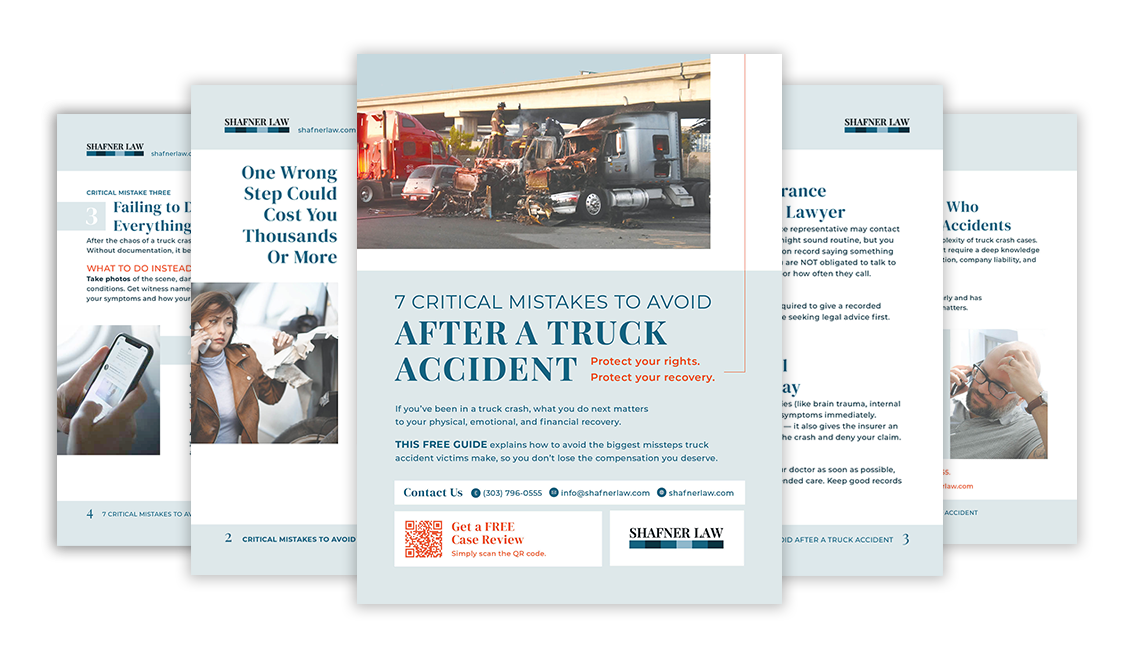
Take five minutes now to set yourself up for success later.
3. The Truck Owner or Leasing Company
Sometimes, the truck itself is owned by a different entity than the one operating it. In those cases, the owner or leasing company may be responsible for ensuring the vehicle is roadworthy. If mechanical failure caused the crash—such as brake issues, tire blowouts, or steering malfunctions—the party responsible for maintenance to keep its trucks road-safe could share liability.
4. The Cargo Loading Company or Shipper
Improperly loaded or unsecured cargo is a frequent cause of trucking accidents. A load that shifts during transport can make a truck unstable or cause it to jackknife. Cargo companies, warehouse crews, and shippers are required to follow strict weight and balance regulations.
If an investigation reveals that cargo was overloaded, unevenly distributed, or poorly secured, the loading company may be responsible for the accident.
5. The Truck or Parts Manufacturer
In some cases, a truck crash isn’t due to driver error or poor maintenance—but a defective vehicle part. If a brake system, steering component, or tire was improperly designed or manufactured, the company that produced or sold the defective part could be held liable under product liability law.
These cases often require in-depth forensic analysis and expert testimony to trace the failure back to a manufacturing or design flaw.
6. Maintenance or Repair Providers
Regular inspection and maintenance are critical for commercial trucks that log thousands of miles each week. If a repair shop or mechanic performed faulty maintenance—such as failing to replace worn-out brake pads or overlooking a safety issue—they could be considered negligent.
Poor recordkeeping can also come into play; when maintenance logs are incomplete or falsified, that’s a red flag that something may have been missed.
7. Government Entities or Contractors
Sometimes, poor road conditions contribute to truck crashes. Potholes, missing guardrails, or unclear signage can turn an already dangerous situation deadly. In those cases, the government agency responsible for road maintenance—or the private contractor hired to do the work—may share liability.
However, suing a government entity involves special rules and deadlines, making these cases particularly complex.
Proving Liability: What Evidence Matters Most
Truck accidents often leave behind an extensive paper trail, and uncovering that evidence quickly can make all the difference in your claim. Key pieces of evidence may include:
- Driver logs and electronic logging device (ELD) data that show hours of service.
- Black box (ECM) data, which records speed, braking, and other performance metrics.
- Maintenance and inspection records from the trucking company.
- Bills of lading and shipping documents are used to trace who handled the cargo.
- Dashcam or surveillance footage from nearby vehicles or businesses.
- Accident reconstruction reports from experts who can explain how the crash occurred.
An experienced attorney can issue preservation letters immediately after a crash, ensuring that none of this vital evidence is destroyed or altered.
How Comparative Fault Works in Truck Accident Cases
Even if you believe the truck driver was clearly at fault, insurance companies often try to shift blame to the victim. Many states follow a comparative negligence rule, which means your compensation may be reduced if you’re found partially responsible for the crash.
For example, if you were 10% at fault for a collision, your damages might be reduced by that percentage. A skilled lawyer can push back against unfair blame-shifting tactics and make sure fault is assigned accurately based on evidence—not assumptions.
Why You Need a Truck Accident Attorney
Truck accident cases are not like typical car crash claims. The stakes are higher, the laws are more complex, and the opposition—usually corporate insurers and defense lawyers—will fight hard to protect their bottom line.
A knowledgeable attorney can:
- Identify all potentially liable parties and help determine who is liable in a truck accident
- Preserve and analyze critical evidence
- Handle negotiations with multiple insurers.
- Consult industry and accident reconstruction experts.
- Pursue full compensation for medical costs, lost income, pain and suffering, and long-term needs.
You don’t have to take on a trucking company alone. Having someone who understands both the legal and emotional weight of your situation can make a tremendous difference in your recovery.
Compassionate Help After a Truck Accident
If you or a loved one has been hurt in a truck crash, determining who is liable in a truck accident can feel overwhelming. Between dealing with injuries, insurance adjusters, and mounting bills, it’s hard to know where to turn or who to trust.
If you are the victim of a truck accident in Wyoming or Colorado, the Shafner Injury Law team is here to help you uncover the truth, hold negligent parties accountable, and fight for the justice and compensation you deserve. We know what’s at stake—and we’ll stand by your side every step of the way.
Contact us today for your free consultation:
info@shafnerlaw.com
303-796-0555
Blog Disclaimer:
Nothing on this blog is intended as legal advice. For legal advice, contact a personal injury lawyer directly.