

1. Why Truck Accidents Are Different (and More Complex)
Commercial trucks are governed by a web of federal and state regulations designed to improve safety, including rules on driver training, hours of service, vehicle maintenance, and cargo securement. When a crash happens, liability can extend far beyond the driver to the company that hired them, third-party contractors, manufacturers, and even government agencies.
That’s why handling a truck accident claim requires specialized legal experience.
See our detailed breakdown of liability to understand exactly who can be held accountable in a truck accident.

2. Common Causes of Truck Crashes
Truck crashes can result from a wide range of factors, many of which are directly tied to negligence or regulatory violations:
Human Factors
- Fatigued driving (often linked to violations of hours-of-service rules)
- Distracted driving
- Impairment or inattention
- Unsafe maneuvering
Regulatory Violations
- Hours-of-Service (HOS) violations
- Logbook or ELD manipulation
Mechanical or Cargo Issues
- Poor maintenance or equipment failure
- Improper loading or shifting of cargo
Environmental Conditions
- Weather hazards like snow or ice
- Roadway design and poor signage
Our blog post on Hours-of-Service violations goes deep into how fatigue and rule violations contribute to catastrophic truck crashes, especially in challenging driving conditions such as on mountain passes in winter weather, exactly like we experience in Colorado.

3. Why Black Box & EDR Data Matters After a Truck Crash
Most people don’t realize that the most critical evidence after a serious truck crash might not be physical, but digital.
Commercial trucks are equipped with “black box” systems such as Electronic Data Recorders (EDRs) and Engine Control Modules (ECMs) that record detailed information about vehicle operation before, during, and after a collision. This data can include vehicle speed, braking, throttle usage, cruise control, steering actions, and even GPS location.
Unlike witness testimony, this information is objective and can help investigators and attorneys understand exactly what happened. A comprehensive explanation of how this evidence works and why it’s crucial is available in our blog post about truck black box data.
Key reasons black box data matters:
- It shows what the truck was doing in the moments before impact
- It can reveal inconsistencies with driver statements
- It helps establish liability and strengthen your legal claim
However, this data can be overwritten quickly unless preserved early, which is why quick legal action is critical.
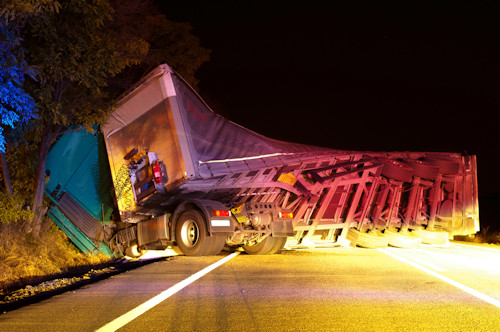
4. Proving Negligence: What Lawyers Look For
After a truck crash, a thorough investigation looks at multiple layers of evidence:
- Electronic logs (ELD data can show whether hours-of-service rules were followed)
- Black box / EDR data (vehicle operation data)
- Police and accident reports
- Skid marks and roadway evidence
- Witness statements
- Maintenance and inspection records
- Cell phone and dispatch communications
An experienced attorney will often work with accident reconstruction experts to piece this evidence into a coherent timeline and narrative that explains how the crash happened. The goal is to clearly and convincingly demonstrate negligence and liability.
Learn more about how Hours-of-Service and other violations affect liability.

5. Who Is Liable in a Truck Accident?
Because of the industry’s regulatory structure, responsibility for a crash often goes beyond the driver. As we explore in detail in our liability overview, potentially responsible parties include:
- The truck driver – if they acted negligently
- The trucking company (carrier) – for hiring, training, supervising, and scheduling
- Truck or parts manufacturers – if a defect contributed to the crash
- Cargo loaders or shippers – if improperly secured loads caused instability
- Maintenance providers – if they failed to keep the truck in a safe condition
- Government entities – if poor road design or maintenance was a factor
Understanding these possibilities is key to pursuing full compensation after a crash.

6. Common Mistakes to Avoid After a Truck Accident
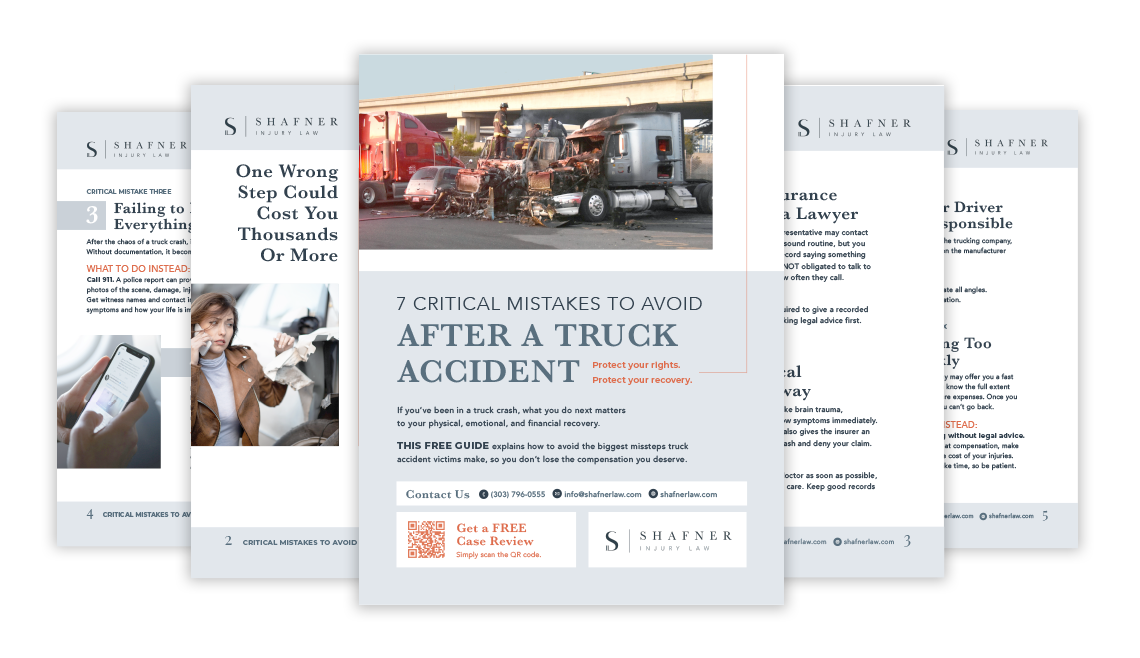
Truck accident claims require a different approach than typical car crashes. One often overlooked resource from our firm, “7 Critical Mistakes to Avoid After a Truck Accident,” highlights key things to avoid, such as failing to document evidence, talking to insurance adjusters without legal guidance, or posting about the crash on social media.
Avoiding these mistakes can protect your rights and strengthen your case.
7. Types of Compensation Available
If you or a loved one was injured in a truck crash, you may be entitled to recover damages for:
- Medical expenses, including future treatment
- Lost wages and reduced earning capacity
- Pain and suffering and emotional distress
- Permanent disability or disfigurement
- Wrongful death damages for families
Trucking claims often involve multiple insurance policies with significant limits, but they also require careful legal strategy to unlock your full compensation potential.

8. Truck Accidents in Colorado & Wyoming — Timelines and Legal Rules
Different states have different deadlines (statutes of limitations) for filing claims:
- Colorado: generally 3 years for personal injury claims
- Wyoming: generally 4 years
The sooner you act, the better protected your evidence and legal options will be.

9. How Shafner Injury Law Helps Truck Accident Victims
At Shafner Injury Law, our team has extensive experience with the unique challenges of truck accident claims. We act quickly to preserve all evidence, investigate every possible source of liability, and build a strong case that maximizes your recovery.
We handle everything for you, including:
- Evidence preservation and analysis
- Coordination with reconstruction and industry experts
- Negotiations with insurers
- Trial representation if necessary
You don’t have to navigate the aftermath alone — we’re here to listen to your story, help you understand your rights, and fight for the compensation you deserve.
10. Next Steps After a Truck Crash
If you or a loved one has been injured in a tractor-trailer or commercial truck accident:
- Seek medical care right away — even if symptoms seem minor
- Report the crash to law enforcement and obtain a police report
- Document everything you can — photos, contacts, roadway conditions
- Avoid recorded statements with insurers until consulting with an attorney
- Contact a truck accident lawyer immediately to preserve evidence like black box/EDR data
Time is critical. Evidence can be lost, electronic data overwritten, and insurance strategies put in place quickly. Learn the most crucial details you need to understand in our blog post What Every Truck Accident Victim in Colorado and Wyoming Should Know.

Learn More and Get Help
Want deeper insight into specific topics? Check out our blog posts, web pages, and free downloads.
- Who Is Liable in a Truck Accident? – offers a detailed liability overview for truck crashes.
- How Hours-of-Service Violations Put Drivers and Others at Risk – explains fatigue and regulatory issues.
- What Truck Black Box & EDR Data Can Reveal After a Serious Accident – maps out the evidence that can make or break your case.
- Truck Accident Lawyer Practice Area – provides an overview of the legal help and compensation you can expect from Shafner Injury Law.
- 7 Critical Mistakes to Avoid After a Truck Accident – free download with info that can help make or break your case.

Ready for a Free Consultation?
If you were injured in a truck accident in Colorado or Wyoming, Shafner Injury Law is here to help you protect your rights and pursue justice.
Contact us today for a free consultation and personalized assessment of your case.

SUBSCRIBE TO OUR EMAIL NEWSLETTER
We fight hard in court, but take it easy on your inbox.
Our quarterly newsletter features decoded legalese, client case studies, local biz spotlights, ways to make an impact in our shared community, and very important office doggo updates. You’ll also get our monthly blog delivered to your inbox.
No spam. We promise.